It took many years for me to finally begin the official process of regaining my amateur status. At 58, I wanted to rediscover my love for golf. I searched online to see if there were other female teaching professionals who had left that world behind to return to amateur golf—but I found nothing. I was hoping for a happy story, something to look forward to, something that would give me confidence in my decision.
In 1990, I won my final collegiate golf tournament at Florida State and confidently decided to turn “pro.” Becoming a professional was as simple as checking the “Pro” box on a USGA qualifier application for the U.S. Women’s Open. That was it. I didn’t qualify—and just like that, I couldn’t go back. I didn’t know any better at the time.
That summer, I played in six Futures Tour (now Symetra Tour) events simply by submitting applications. There were no qualifiers back then. After those six events, I realized I wasn’t cut out for that lifestyle, so I turned to teaching golf. As a professional, I was no longer allowed to play in amateur ladies’ events, so I worked as an assistant golf professional, giving lessons and clinics.
In 1997, I joined the LPGA Teaching and Club Professional Division so I could compete in section events and the National Championship. It was fun competing against other teaching professionals, and even winning $50 for making the cut felt like a big deal. For years, I would practice intensely for a few months leading up to summer events, sometimes make the cut, sometimes not, and then return home to teach.
People often think golf professionals have a great life because they play golf all the time. That’s rarely the case. Ask any club professional how often they actually play—most are lucky to get out once a week, usually with members.
In 2010, I married a member from the club where I worked, and new decisions followed. I initially continued working in the pro shop, but over the next seven years, my hours gradually decreased. Eventually, I focused mainly on junior golf and ladies’ clinics.
Before that, I had built a solid career teaching clinics and served as the tournament director for the North Florida Junior Golf Foundation until 2009. Early in my marriage, my husband suggested I leave the LPGA so I could enjoy playing golf again—but at the time, that felt impossible. How could I make a living without teaching?
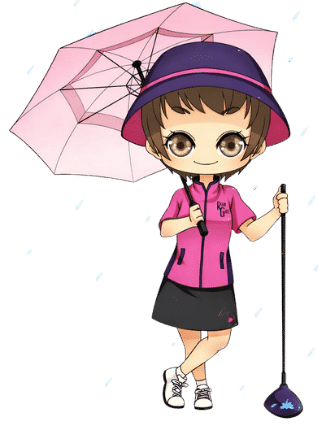
During my PGA Playing Ability Test (PAT), I had the idea to develop a rain skirt. Just three months later, in March 2013, I founded Rain Girl, Inc. This opened a new chapter in my life—connecting with women golfers who understood the need for practical, stylish rain gear during those sudden showers. Over the next seven years, I created instructional YouTube videos and focused on marketing Rain Girl to amateur women golfers across LPGA Amateur chapters nationwide.
My first Florida Open was eye-opening. Amateur women golfers—even highly skilled ones—approached the game differently. After rounds, they gathered for lunch, shared laughs, and genuinely enjoyed each other’s company.
The year I turned 50, the USGA introduced the inaugural U.S. Senior Women’s Open. Finally—another tournament I could play in! Around the same time, the Florida State Golf Association introduced a Senior Division in the Florida Open. Playing shorter courses and competing again reignited my excitement.
I was paired with Kim Keyer-Scott during my first two rounds, and her encouraging words—“good shot,” “nice drive”—made a lasting impression. I had spent 20 years around professional tournament golf, where interactions were often more reserved unless you already knew someone. That experience changed me. Now, I make it a point to encourage others on the course.
In 2023, I hosted my first Rain Girl Invitational. Jan Stephenson supported the event while promoting her rum and wine, and she also served as a guest speaker. The goal was simple: create a fun, welcoming tournament for women golfers of all levels.
We had amateur flights and a single professional flight. I hoped more professionals would embrace a relaxed, social tournament—but most weren’t interested without a significant purse or appearance fee. The few who participated were close friends who came to support me, and I’m incredibly grateful for them.
For at least five years, the idea of regaining my amateur status stayed in the back of my mind. When I finally discussed it with my husband, I laid out everything I would be giving up—including a major part of my identity for the past 35 years:
His response? “Whatever you want—those are all okay with me.”
Here’s what I gain by returning to amateur status:
I officially regained my amateur status on February 2, 2026. In less than two months, I’ve already learned a lot.
My husband and I played in our first couples tournament in Bermuda—and we had a blast. We won our flight, met amazing people, and connected with couples who share our love of golf and travel. It felt a little strange when people asked if I had ever won my club championship—I had to admit I had never even played in one.

Port Royal Golf Course – Bermuda 2026
As I update my Rain Girl website, I’m carefully adjusting the language to reflect my current identity. I want to honor my years as a teaching professional without erasing that chapter—just making it clear that it’s in the past.
There are practical updates, too: new business cards, refreshing my YouTube channel, and redefining how I present myself.
Emotionally, this has been a long and difficult decision. For years, I felt stuck between two worlds—loving the game but not quite fitting into either the professional or amateur space.
So now the question is: what do I call myself?
Do I need to explain the difference between a teaching professional and a tour professional? Or does it even matter anymore?
For so long, I felt conditioned to stay in my lane because I was a “pro.” But now I see things differently. There are amateur players who are far better than I ever was—and that’s okay.
The truth is simple: I’ve retired from teaching, and I’m finally ready to enjoy playing the game again.
And that feels pretty great.